Where does preserved moss wall art look its best?
@mossandtimber
November 23, 2026 · 8 min read
Preserved moss wall art works best in spaces with indirect light, moderate humidity, and minimal air movement. These conditions keep the moss’s color stable, reduce dust buildup, and prevent the material from drying out or becoming brittle over time. Getting the placement right makes the difference between a piece that stays vibrant for years and one that fades or sheds prematurely.
Why location matters for preserved moss
Unlike live plants, preserved moss no longer photosynthesizes. It has been treated with a glycerin-based solution that replaces the natural sap, keeping it soft and flexible. That treatment also means the moss reacts differently to its environment. Direct sunlight can bleach the color, while very dry or drafty spots can cause the moss to shrink or shed. High-traffic areas where people brush against the wall can loosen pieces, especially if the installation is a modular panel or a framed design.
Best rooms for preserved moss wall art
Living rooms and family spaces
The living room is one of the most popular places for preserved moss wall art. It sits in a spot where people gather but where activity is usually at a comfortable distance. A wall that receives indirect light from a window, not direct sun rays, will keep the moss looking rich for many years. The neutral palette of many modern interiors pairs naturally with the green tones of moss, creating a calm backdrop. If the room has natural materials like wood, stone, or linen, the moss reinforces that organic feel without needing any upkeep.
Home offices and studies
A preserved moss piece in a home office adds a visual break from screens. Placing it where you can see it from your desk but out of the path of direct sunlight or air conditioning vents works well. The gentle texture and muted color can make the space feel less sterile. Because preserved moss does not need watering or trimming, it won’t distract you during work hours. The phrase “Home” offices often have controlled humidity and temperature, which suits preserved moss just fine. Just keep the piece away from any heat source like a radiator or space heater.
Bedrooms
Bedrooms benefit from the calming presence of preserved moss. It adds a soft, natural element without the maintenance that live plants require. A headboard wall or a wall opposite the bed works well, as long as direct sunlight doesn’t hit the moss for more than an hour or two each day. The lack of moisture exchange means the moss won’t affect indoor humidity, so it’s safe for people with allergies or respiratory concerns.
Bathrooms with caution
Bathrooms can host preserved moss wall art, but only if the room has good ventilation and the moss is not placed directly in the shower spray. High humidity from steam is generally fine for preserved moss, it doesn’t rot like live moss would, but standing moisture on the surface can eventually dull the color. A spot on a wall opposite the shower, away from the direct wet zone, works. If the bathroom has a window, make sure the moss is not in the sun streaming through it. The warmth and light combined can speed up fading.
Where preserved moss does not belong
- Direct sunlight, South- or west-facing windows that get intense afternoon sun will bleach the moss within months. Even north-facing windows can cause problems if the moss sits right on the sill.
- Kitchens over the stove or sink, Grease particles and cooking steam can cling to the moss, making it sticky and attracting dust. Cleaning preserved moss is tricky; you cannot wash it with soap and water.
- Drafty hallways or near exterior doors, Frequent temperature changes and air movement dry out the glycerin treatment, causing the moss to become brittle and shed.
- Outdoors or in unsealed areas, Preserved moss is not waterproof. Rain, wind, and direct sun will destroy it quickly. It belongs indoors only.
- Above radiators or heating vents, Hot, dry air accelerates moisture loss from the preserved material, leading to shrinkage and color change.
How light, humidity, and air flow affect the moss
Indirect light
Preserved moss retains its color best in indirect light. A room with sheer curtains or a north-facing window provides the right conditions. If you want to place moss in a brighter room, choose a wall that does not receive direct sun at any time of day. If the room has strong natural light, consider positioning the moss behind a piece of furniture or in a corner where the light is softer. Over time, even indirect light can cause subtle fading, but that happens very slowly, over many years rather than weeks.
Humidity
Moderate indoor humidity, between 40 and 60 percent, is ideal. In very dry climates or during winter when heating systems dry out the air, the moss can lose some of its softness. You can add a room humidifier or place a small dish of water near the piece to keep the local humidity slightly higher. In very humid environments, the moss may feel slightly damp but should not develop mold because the glycerin acts as a preservative. Still, good air circulation helps prevent any musty smell.
Dust removal
Over time, dust settles on the moss. You can remove it gently with a soft brush, a hairdryer on a cool, low setting, or compressed air. Avoid vacuuming directly, as the suction can pull pieces loose. Regular dust removal keeps the moss looking fresh and prevents the dust from trapping moisture against the surface. If the moss does get dusty, a quick brush every few months is usually enough.

Interior styling that complements preserved moss
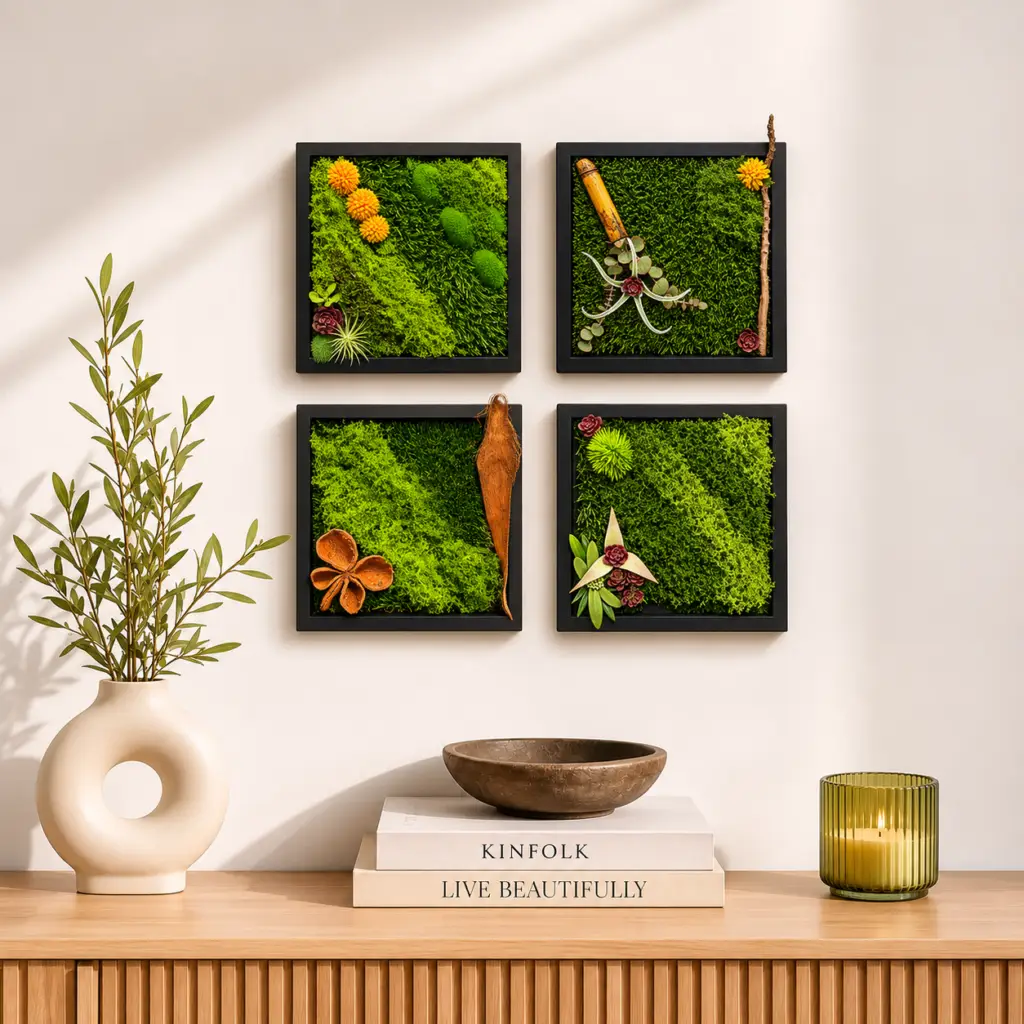
Preserved moss wall art works best when the room’s other elements are simple. The moss itself is textured and rich in color, so it stands out more in a setting with clean lines and a restrained palette. Neutral walls, white, beige, grey, or soft earth tones, let the green be the focal point. Natural materials like wood, stone, wool, and linen reinforce the organic feel. If you have a lot of pattern or bright colors already, the moss can get visually lost. A single large piece on a plain wall often has more impact than several small pieces scattered around.
The phrase “Home” decor trends in recent years have moved toward biophilic design, bringing natural elements indoors. Preserved moss fits that trend without the commitment of live plants. It adds a living texture without needing water, soil, or pruning. That makes it a good choice for people who travel often or who don’t have a green thumb. It also works well in rental spaces where you cannot install permanent planters or irrigation.
Framing and mounting considerations
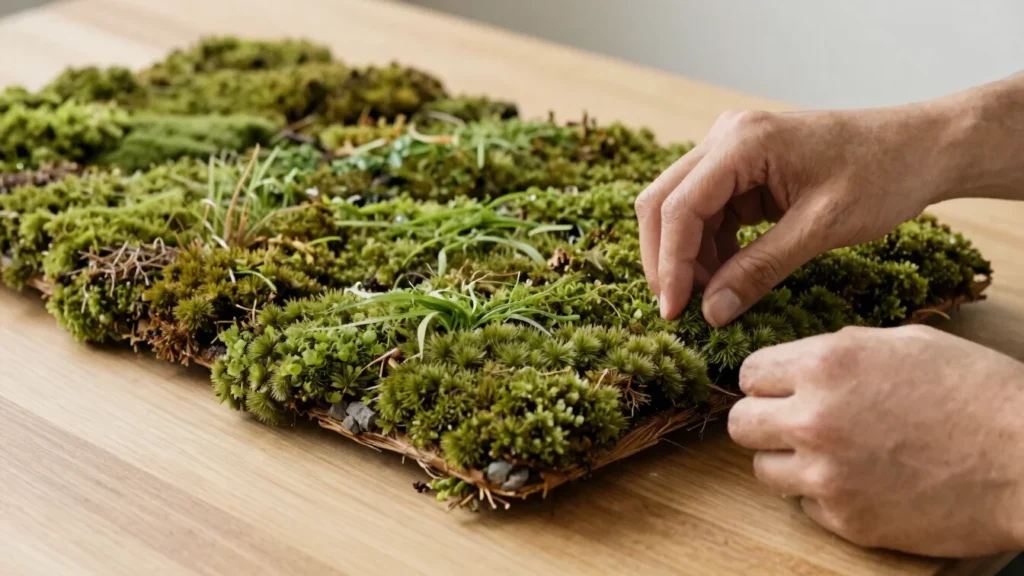
How the moss is mounted affects where it can go. Framed pieces are sealed behind glass, which protects the moss from dust and accidental touch but can also trap heat if placed in direct sun. Open panels, where the moss is exposed to the room air, need more careful placement to avoid dust and drafts. If you choose an open panel, a spot with low traffic and no direct airflow is best. Some people mount moss on a backer board and then frame it with a shadow box to give it depth while still offering some protection.
Weight matters too. A large moss panel can be heavy, especially if it includes multiple species of moss or a wooden frame. Make sure the wall can support it, and use appropriate hardware. If you are installing in a bathroom or kitchen, check that the wall surface is not prone to moisture behind the piece. A little planning ahead saves you from having to move it later.
Color stability over time
One of the main reasons people choose preserved moss is that it stays green without maintenance. But color stability depends a great deal on location. In a low-light, stable environment, the moss will hold its color for several years. In a bright room, even without direct sun, you may notice a slow shift toward yellow or brown. That is not a defect, it is the natural result of light exposure on the dyes and glycerin. If you want the moss to stay as green as possible, place it in the darkest part of the room that still looks good visually. A hallway with no windows or a corner away from any light source will preserve the color the longest.
If the moss does start to fade, some people touch it up with a spray of diluted green dye, but that is a delicate process and can stain nearby surfaces. Prevention through correct placement is far easier than restoration.
Practical tips for choosing the right spot
- Observe the light pattern, Spend a day watching how sunlight moves through the room. Choose a spot that gets no direct sun at any hour.
- Check for drafts, Feel for air movement near windows, doors, or vents. If you feel a draft, pick a different wall.
- Consider the room’s use, A quiet corner of a living room or bedroom is better than a busy hallway where people might brush against it.
- Keep it clean, Avoid placing moss near cooking areas, fireplaces, or anywhere smoke or grease can settle on it.
- Plan for the long term, If you think you might rearrange the room later, choose a method of mounting that allows you to move the piece without damaging the wall or the moss.
Preserved moss wall art is a durable, low-maintenance way to bring nature indoors. Its longevity and appearance depend largely on where you put it. A spot with indirect light, stable humidity, and minimal disturbance will keep the moss looking its best for years. Avoid the obvious hazards, direct sun, heat sources, moisture, and rough handling, and you will get the most out of your piece.